What is a cataract?
Who gets cataract? A cataract is more prevalent with increasing age, though it can occur at any time in life. For those aged 45 to 74 the proportion of people with vision reduced by cataract is %. By age 60 decades, more than 60% of eyes have cataracts. By 75 decades of age, roughly 95% of eyes possess a cataract. A cataract is a point where the clear natural lens in the eye becomes cloudy to ensure the light is scattered and blocked.
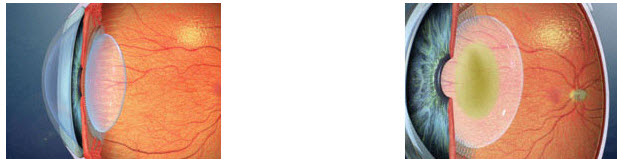
Vision is subsequently diminished. It might be like looking through frosted glass or there may be glare in bright lights with nighttime driving. Eye with a crystalline lens is clear When you are young, your crystalline lens is clear (no cataracts), therefore vision is apparent Cloudy crystalline lens and cataract is shaped Over the age of 50 decades, the crystalline lens becomes cloudy (cataract forms), and vision gets less apparent, particularly in dim conditions.
How can you know if you have a cataract? Signs of cataract: • Blurred vision • Reduction or loss of color perception • Difficulty with vision during the night or in dim light • Spectacle prescription changes but glasses no longer enhance the vision to a normal standard How cataract impact your vision Over time vision gets affected and might be fuzzy. Colors may appear less vivid and washed out. At least 20% of cataracts get worse for a year and 65% worsen over five years. If the cataract is left untreated, it is going to continue to develop and vision will get worse. Should you suspect you might have a cataract, you should see a cataract surgeon like Dr. Natasha Lim who’ll execute a sight evaluation and examination of their eyes to look for the presence of cataract as well as any other eye problems that might affect the vision. What’s the treatment for glaucoma? Cataract can’t be treated with medication so operation is the only treatment choice.
Cataract operation Singapore is among the very successful and fifteen minutes together with more than a million patients opting to have cataract surgery every year, it’s one of the most frequent of all elective surgical procedures. Millions of cataract procedures are performed worldwide and the security and predictability are known to be excellent. The lens implant is predicted to last a lifetime. When if I undergo cataract surgery and intraocular lens implantation surgery? The opportunity to think about the operation is when the effects of cataract begin to influence your everyday activity. When your quality of life starts to be affected, you need to undergo cataract operation to restore your vision.
What impacts the result of your cataract surgery? • The skills and expertise of the surgeon • The accuracy of calculations and measurements for your lens implant power (biometry) • The type of lens implant utilized • The cataract surgery equipment and technology used • The co-operation of this patient throughout the process • The natural healing process of the eye itself • The existence of other eye diseases may affect the prognosis of cataract operation How do cataract operation alter my life? A lot of people who undergo cataract surgery by Dr. Natasha Lim praise the life-changing effect of the process. Vision is revived and colors return to life with the world being brighter and more vibrant.
The micro-incisional technique Cataract operation utilized by Dr. Natasha Lim intends to provide a high quality of vision following surgery. In circumstances where the individual has a preexisting refractive error such as short-sightedness, long-sightedness, astigmatism or presbyopia (“Lao hua”), cataract surgery has the potential to provide better eyesight than has been formerly undergone (without glasses) before the illness developed.
Dr. Natasha Lim is a fellowship-trained, specialist cataract, the refractive and corneal surgeon who has performed cataract surgery for over 15 decades. Her ophthalmic training was largely undertaken in Moorfields Eye Hospital in London, the leading specialist eye facility in the UK, and among the planet’s principal eye center. Ever since becoming a consultant at Singapore National Eye Centre in 2008, Dr. Lim has built her clinic and operation around clinical excellence, reputation, and confidence. She intends to deliver the highest possible quality of care.
Cataract surgery to correct refractive errors of the individual eye Ask the doctor About Us Dr. Lim created a breakthrough by providing better health care, improving her consultation and communication skills with patients and attaining high-quality outcomes for patients. Location #19-01/02/03/07 Royal Square @ Novena 101 Irrawaddy Road Singapore 329565 Tel: -LRB-65-RRB- 6570 2220 -LRB-65-RRB- 9299 5729 Email: dr@drnatashalim.com Website: www.drnatashalim.com
 Healthcare